

As we move through 2026, cryptocurrency has transitioned from a niche technical experiment into a cornerstone of the modern financial landscape. But for many, the question remains: is it a revolutionary currency or simply a speculative asset? To understand its value, one must look at the engine driving it—Blockchain Technology.
The Core Pillars of Crypto
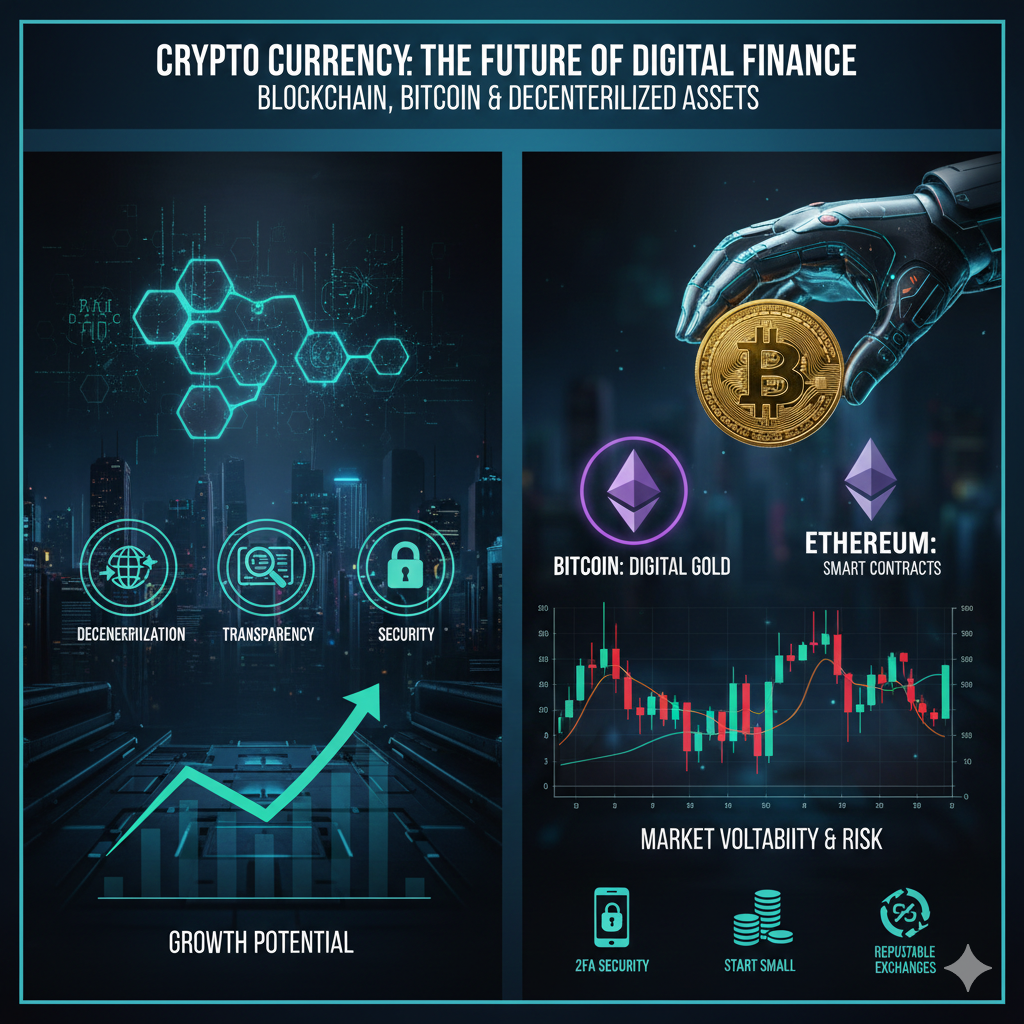
At its heart, cryptocurrency is a decentralized digital asset secured by cryptography. Unlike the US Dollar or Euro, it isn’t issued by a central bank. Instead, it relies on three main principles:
- Decentralization: No single entity (like a bank or government) controls the network.
- Transparency: Every transaction is recorded on a public ledger called a blockchain, which anyone can verify but no one can alter.
- Security: Complex mathematical algorithms ensure that coins cannot be forged or spent twice.
Why People Invest
Investors are drawn to “Digital Gold” like Bitcoin because of its capped supply—only 21 million will ever exist—making it a potential hedge against inflation. Others look to Ethereum for its “Smart Contracts,” which allow for automated agreements without lawyers or middlemen.
Navigating the Risks
While the potential for high returns is real, the “crypto-coaster” is famous for its volatility. Prices can swing 10% or more in a single day. Furthermore, the responsibility of security falls entirely on you; if you lose your “private keys” (your digital password), your funds are gone forever.
Getting Started Safely
- Use Reputable Exchanges: Stick to well-known platforms like Coinbase or Binance.
- Enable 2FA: Always use two-factor authentication to protect your account.
- Start Small: Only invest what you can afford to lose while you learn the ropes.